
Morley–Ellenbrook Line (Ellenbrook Line)
Alliance Development (RFP) – Concept Design, 2020
Client: METRONET / Public Transport Authority (PTA)
Architect: Coniglio Ainsworth Architects (CAA) + MPS Architects (CAMPS JV)
Shortlisted Alliance Team: Ellenbrook Alliance (CPB Contractors, Downer EDI)
Project Overview
Our concept design for Ellenbrook Station was developed as part of the Ellenbrook Alliance bid for the Morley–Ellenbrook Line RFP, which was ultimately awarded to and delivered by the MELconnx Alliance. The design builds on earlier strategic work by CAA for the METRONET Transit Options Analysis (2018) and Project Definition Plan (2019).
Urban and Landscape Response
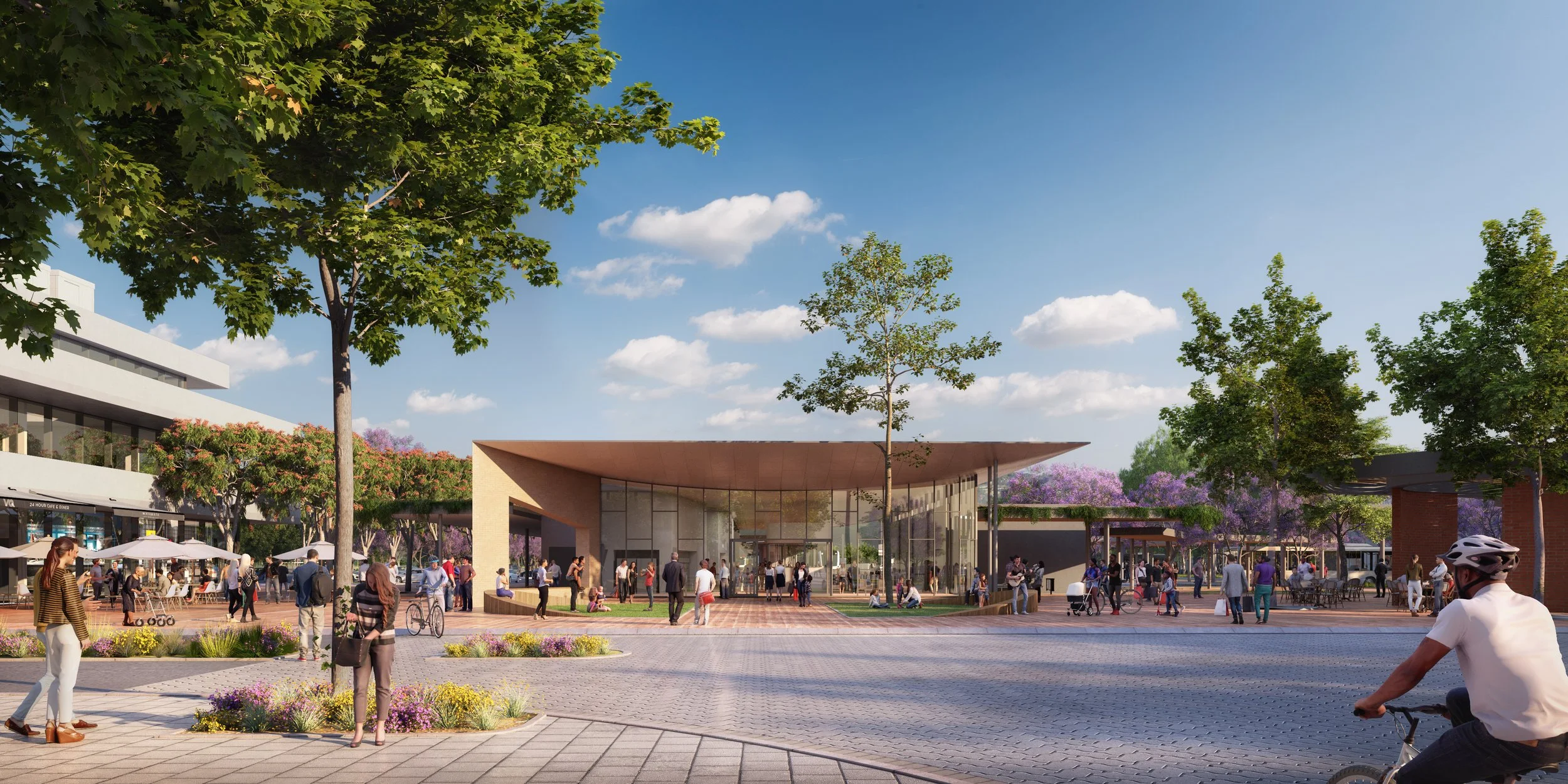
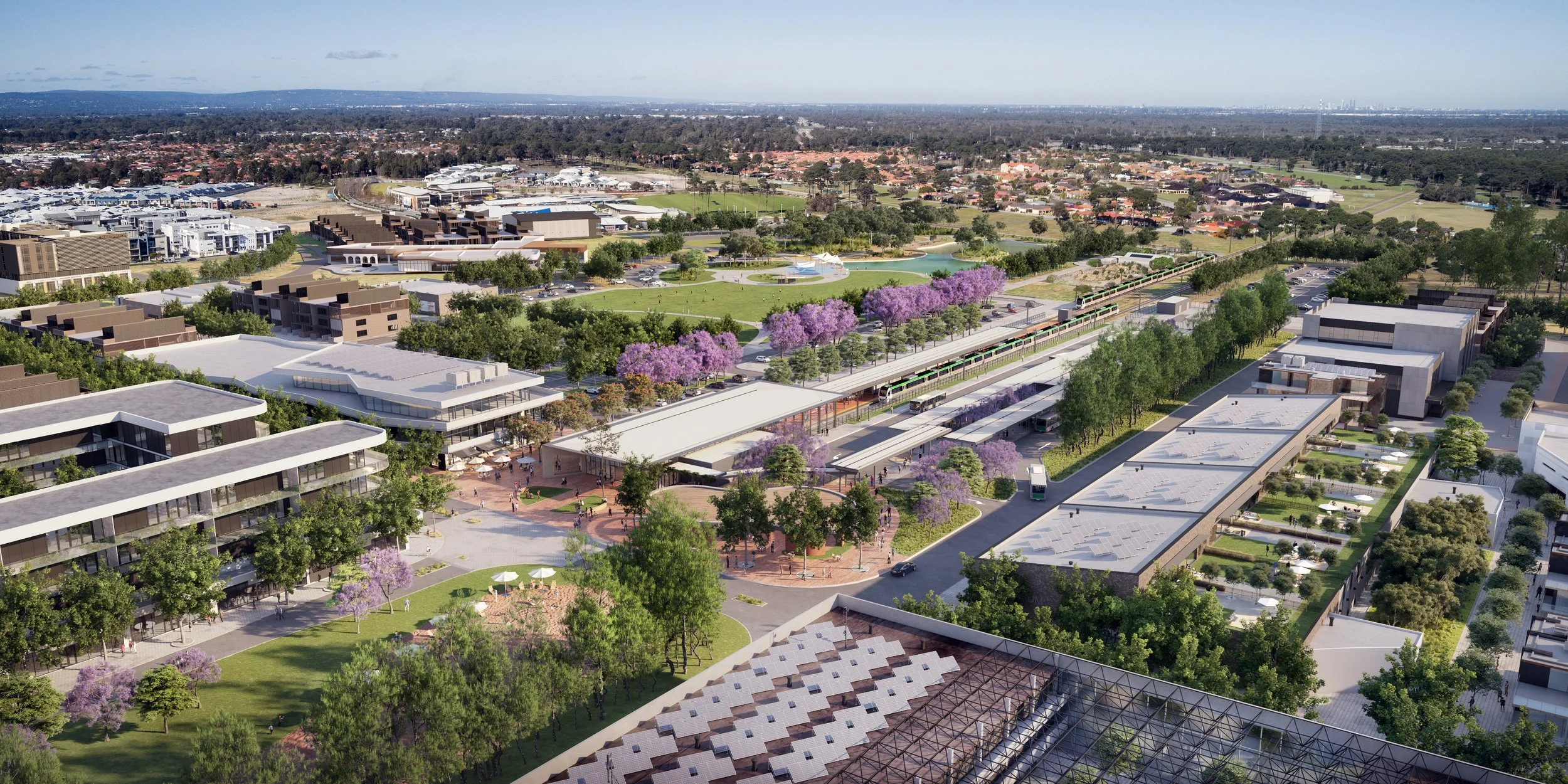
The precinct concept design is guided by a strong placemaking framework reinforcing Ellenbrook’s established “village” character. A fine-grained pedestrian network connects the station to the town centre and future development. Key spaces, including the Welcome Place and Village Common, support commuter flows and community use through informal seating, gathering areas, and native planting. Remnant pine trees are retained to anchor the site historically, while Swan Valley species reinforce regional identity and environmental performance.
Architectural Design
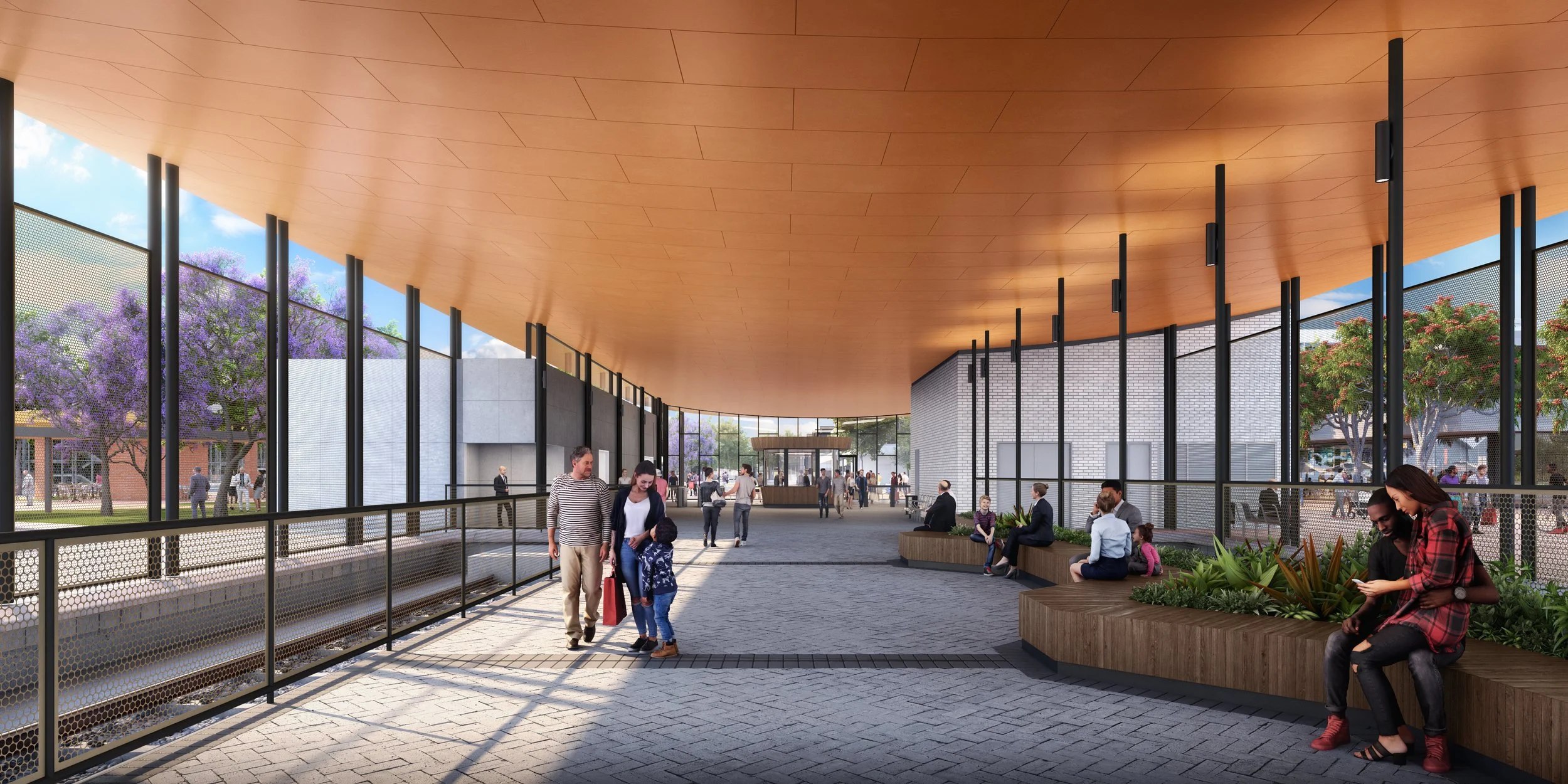
The station is defined by a simple, expressive form centred on a sweeping roof that creates a light-filled public space. The entry building is organised around a central foyer with clear sightlines to the platform, supporting wayfinding and passive surveillance. Full-height glazing follows the roof soffit, maximising daylight. Feature brickwork grounds the building, complemented by lighter cladding. The roof extends beyond the concourse to form a sheltered threshold with integrated seating and planting.
Transport Integration
The station operates as a multimodal interchange, with an at-grade bus interchange (18 bays) directly adjacent to the entry. A park-and-ride (approx. 500 bays), kiss-and-ride, and bicycle facilities support diverse access modes. Continuous paving and clear paths ensure seamless movement, with cycle links connecting to the broader network.
Key Features
150m long at-grade island platform
Landmark entry aligned to town centre grid
Central concourse with strong visibility
Bus interchange (18 bays)
Park-and-ride (approx. 500 bays)
Secure bicycle parking
“Welcome Place” and “Village Common”
Retained pine trees and native landscape
Design Approach
Integrate with existing and future town centre
Create a vibrant, human-scale precinct
Prioritise wayfinding and accessibility
Establish a strong civic identity
Integrate architecture, landscape, and infrastructure
Deliver durable, low-maintenance outcomes
Support future activation and growth