
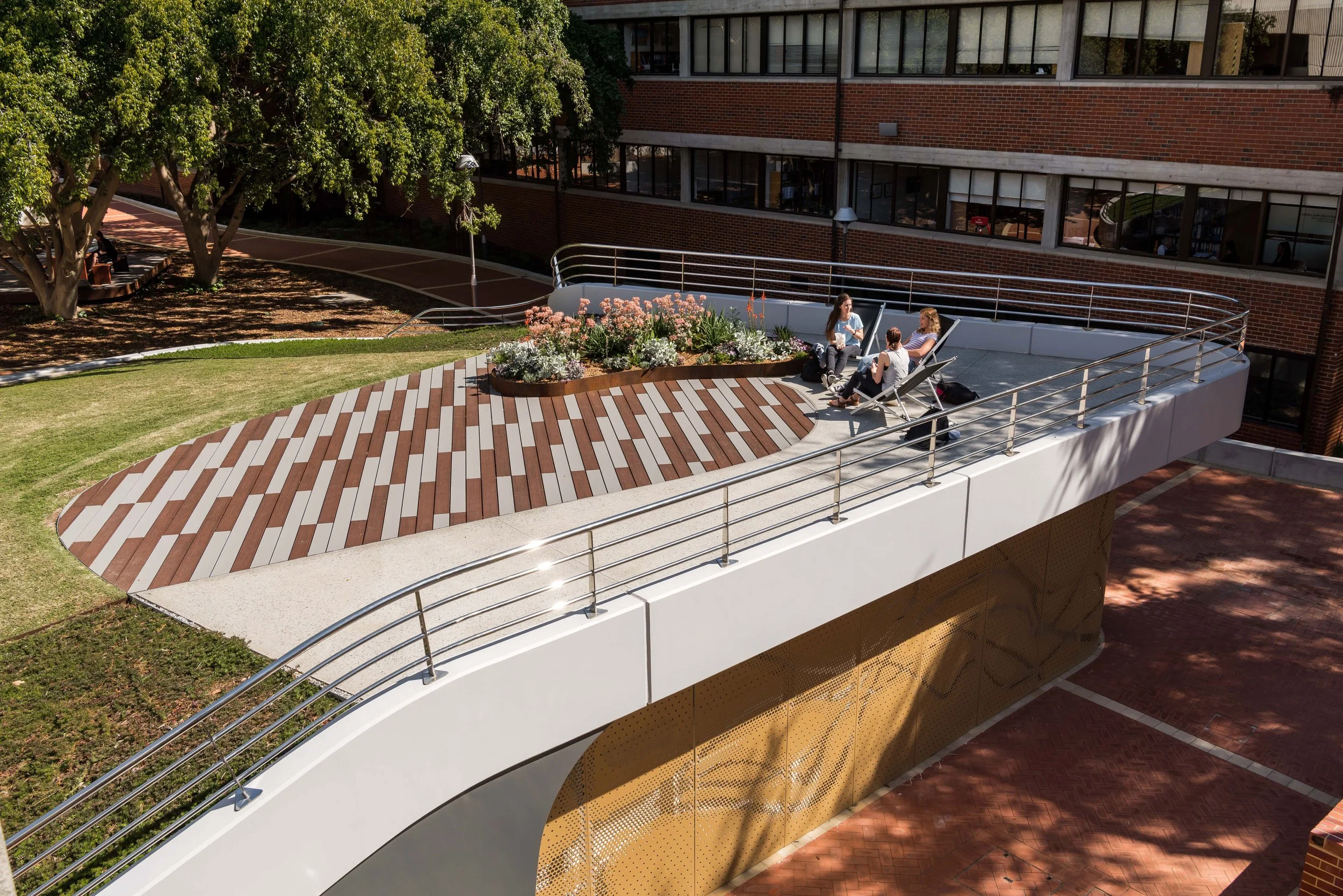
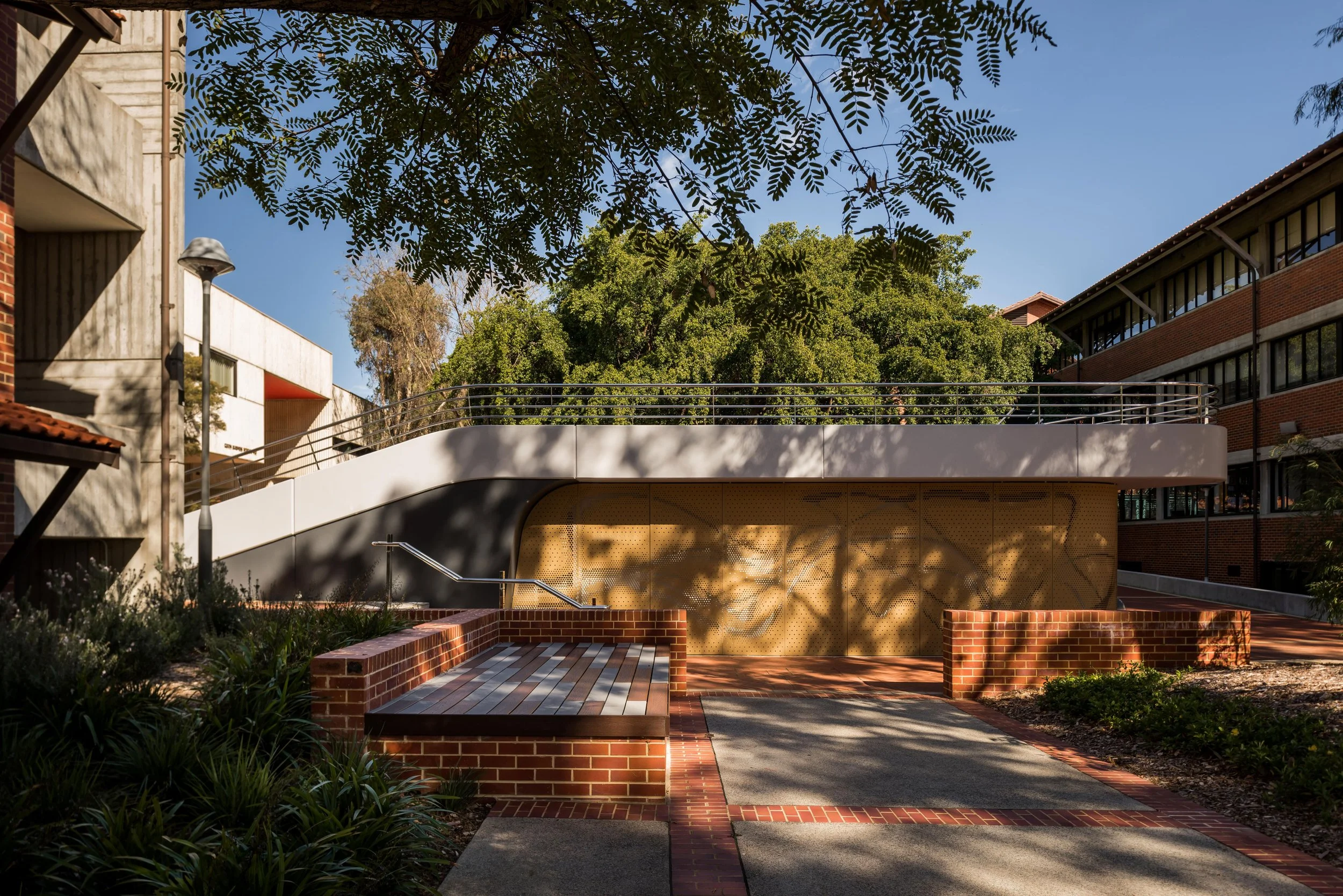
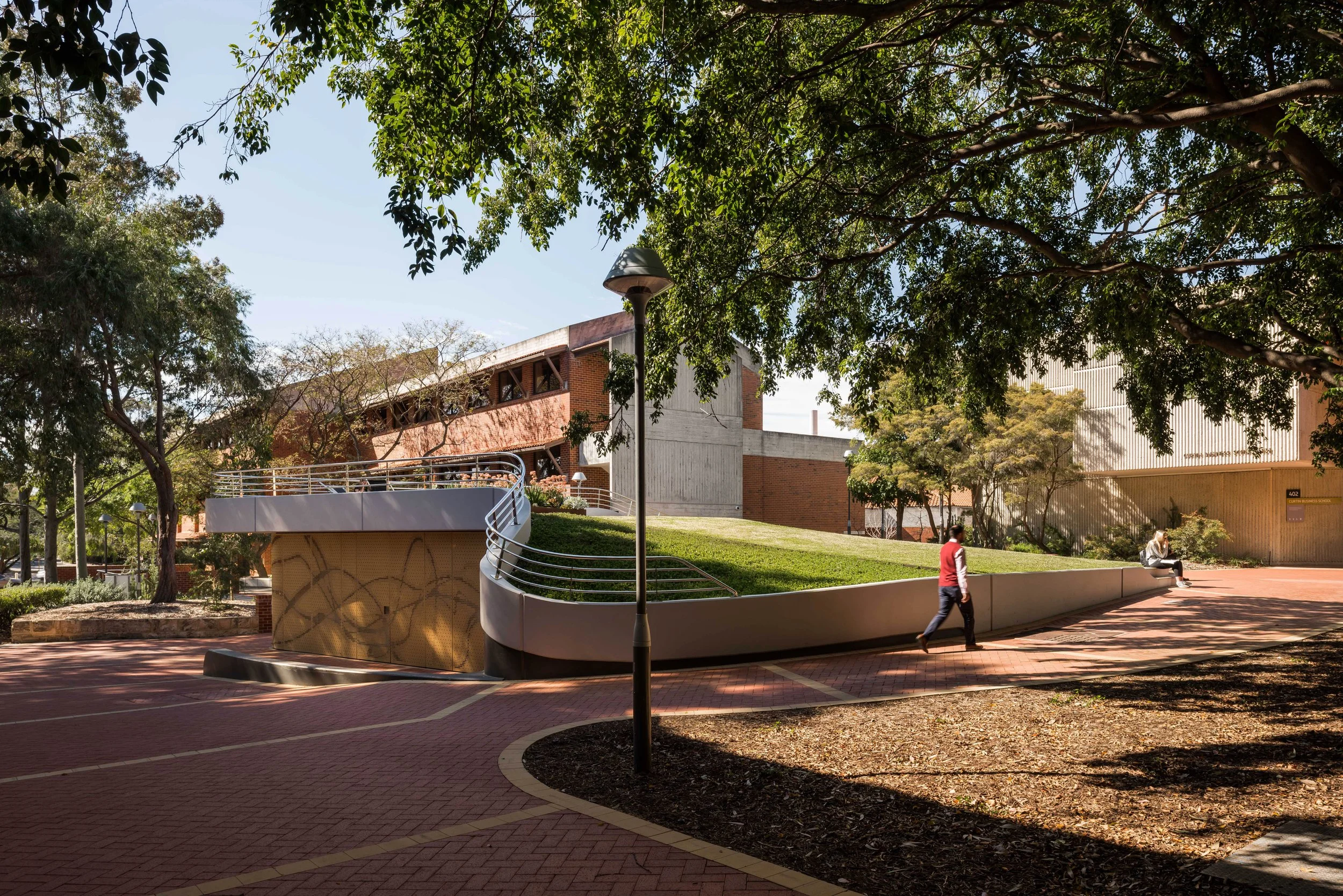
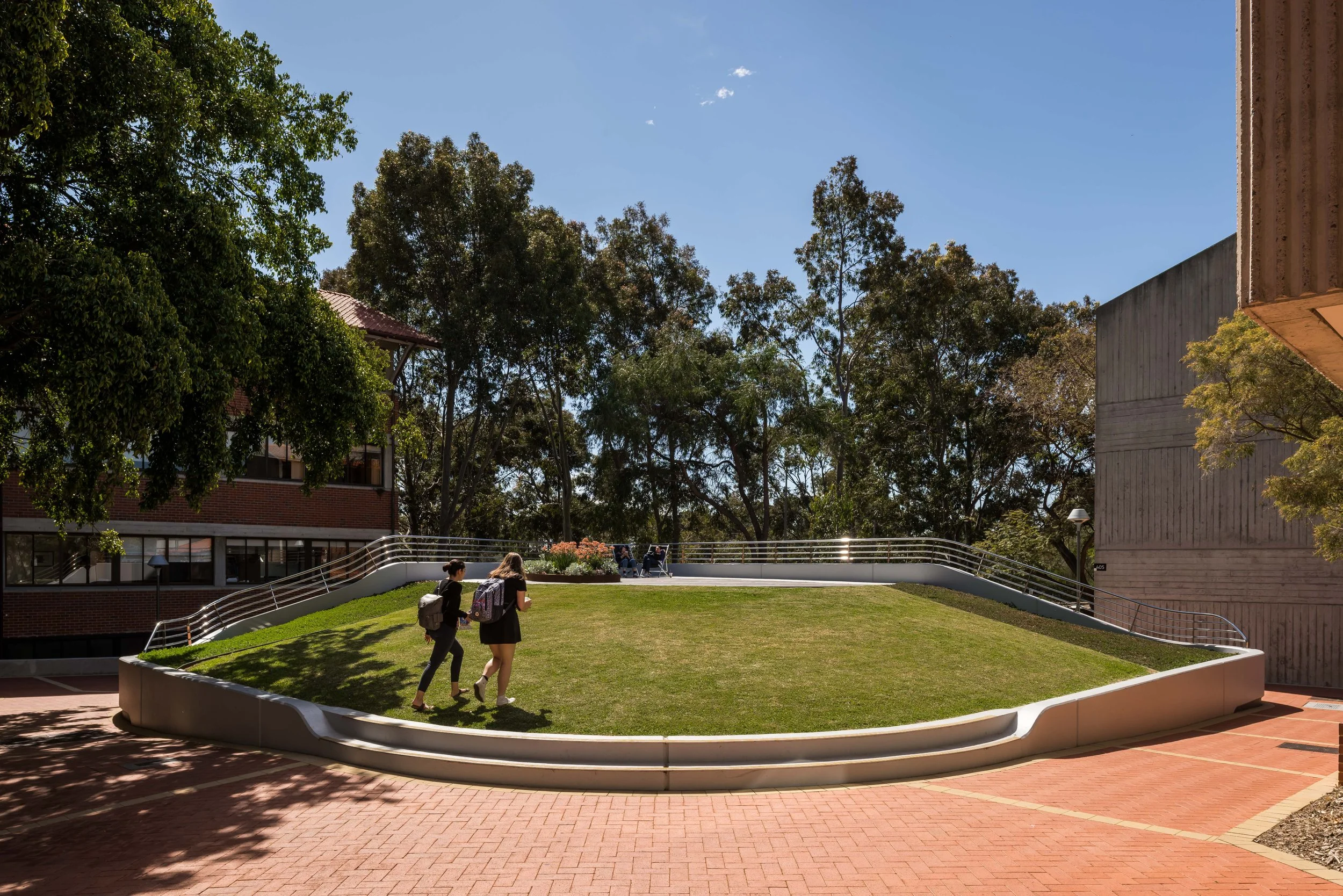
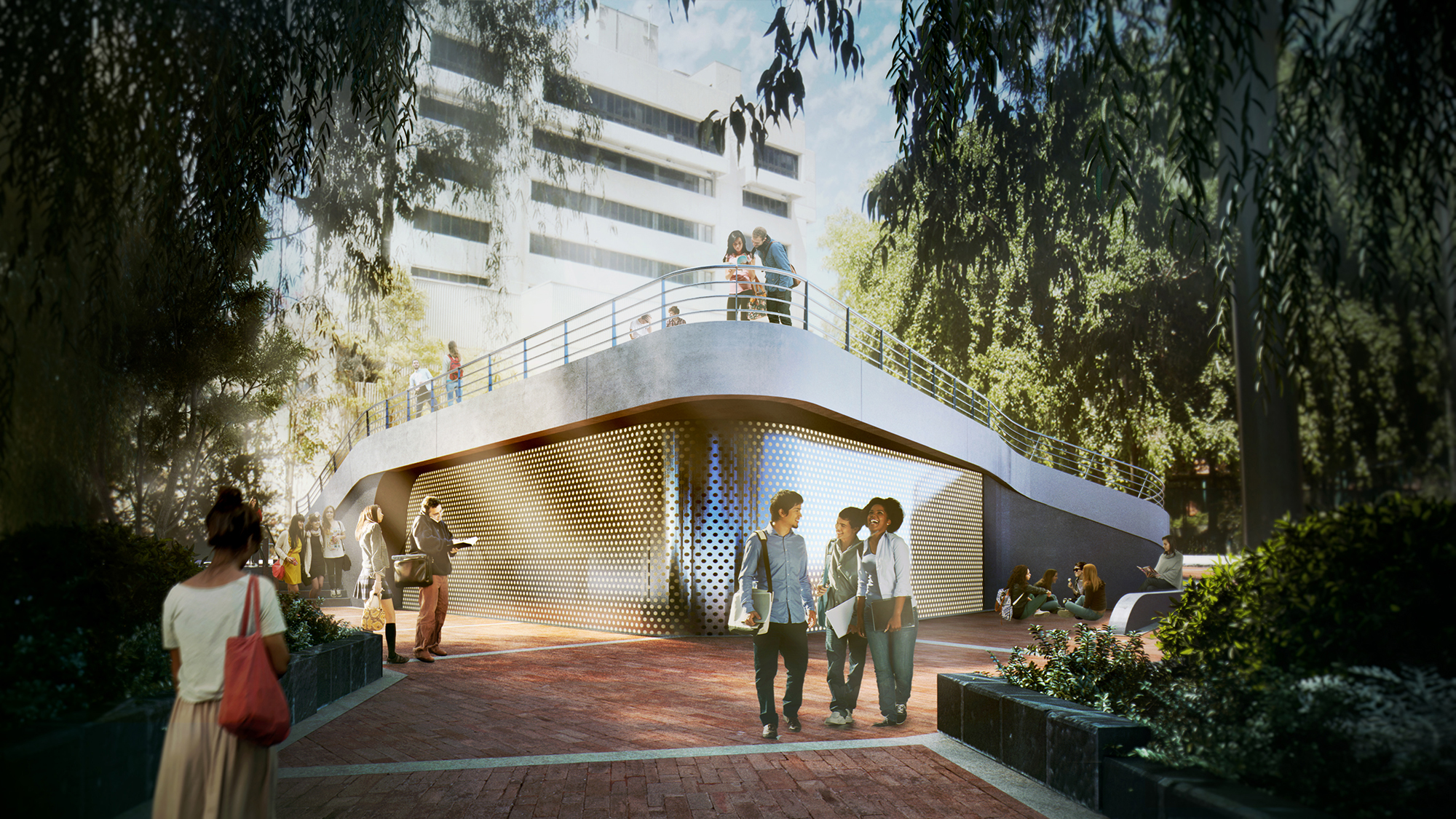
The Curtin University HV Substation B153 project delivers a highly functional and practical replacement HV/LV substation while simultaneously transforming the existing campus forecourt between the nursing and business precincts.
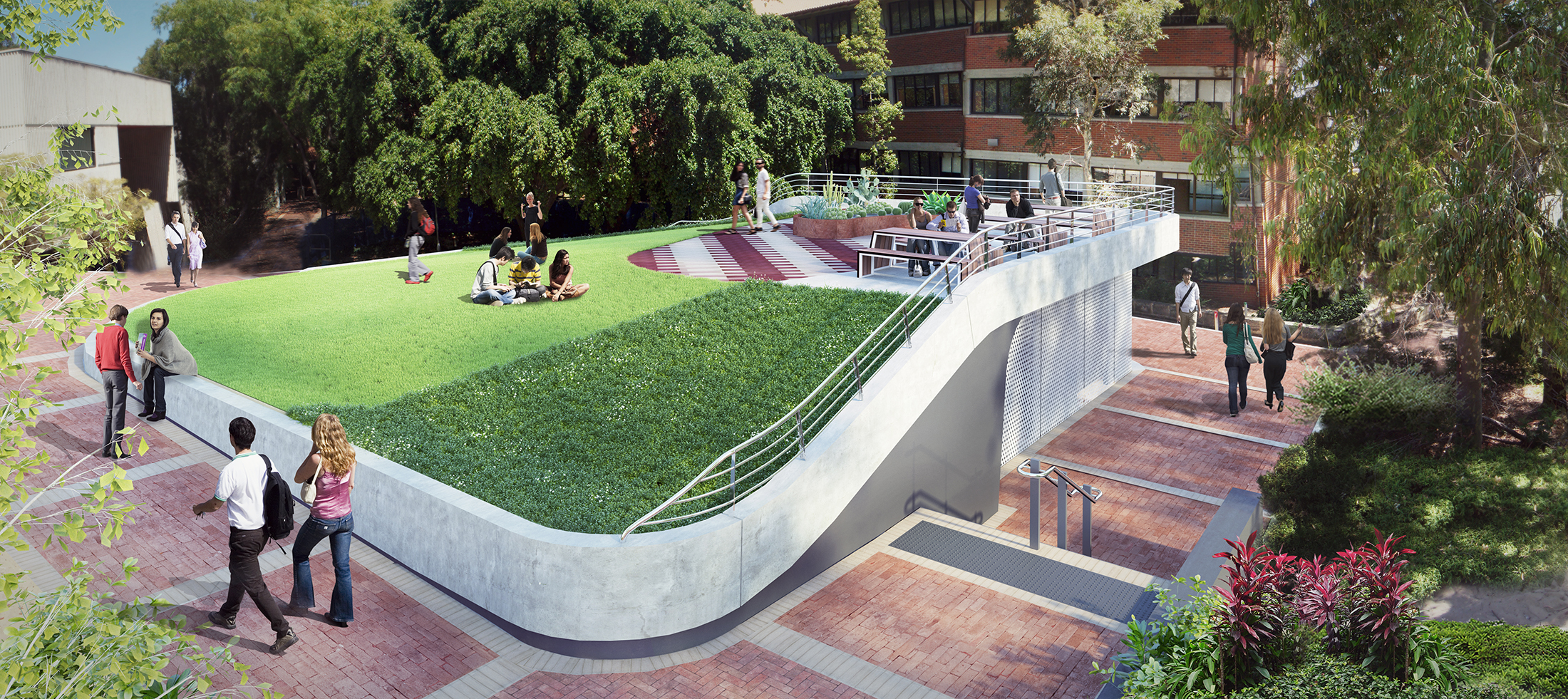
The project was CAA’s first collaboration with Curtin University and responds to the need to replace an ageing substation that could no longer meet the campus’ growing power demands. Recognising an opportunity beyond purely utilitarian infrastructure, the design reimagines the substation as an integrated piece of campus architecture and landscape. A terrace roof is incorporated over the facility, accessed via landscaped embankments, creating an inviting space for staff, students, and visitors to relax, study and gather.
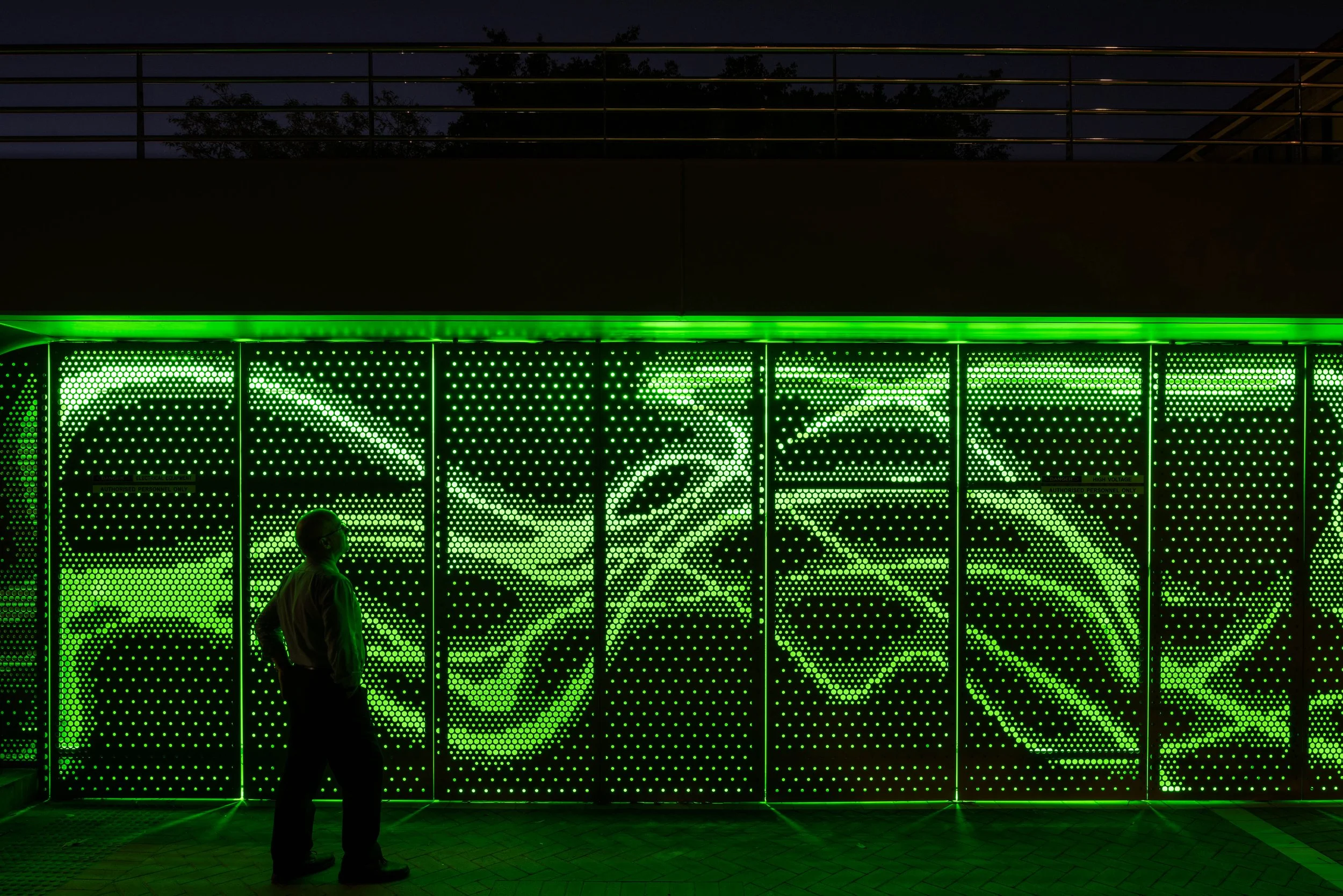
Perforated metal artwork screens, designed by CAA, envelop the substation, recasting a typically utilitarian structure as a crafted piece of campus infrastructure. The patterning references the movement and energy of electrical flow, establishing a clear conceptual link to the building’s function, while carefully integrated backlighting brings the façade to life at night, creating a welcoming and visually engaging presence within the precinct. Designed in close collaboration with REALMstudios, BG&E, NDY, Hallmark Plumbing & Hydraulic Consultancy, JMG Building Surveyors and Aria Project Developments, the coordinated and holistic design response ensured architecture, landscape and engineering were carefully integrated.
A high degree of technical coordination was required, both in relation to a concurrently delivered major mechanical services upgrade (including underground chilled water infrastructure) and extensive existing below-ground services. These complex interfaces demanded careful planning to minimise disruption to students and staff, and to ensure continuity of critical university services throughout construction. The project was delivered by National Projects WA, who carefully managed the logistical and staging complexities of the site, ensuring a successful outcome within a highly constrained and operational campus environment.
Photography by Dion Robeson.